

Updated UK crematoria guidance introduces revised requirements for emissions control and monitoring, providing operators with clearer expectations around how emissions should be measured and monitored.
A key area of the updated guidance is continuous emissions monitoring, with specific standards identified for the measurement of particulate matter, carbon monoxide (CO), oxygen (O₂) and temperature.
For crematorium operators, this makes it important to review existing monitoring arrangements and understand whether the equipment currently installed meets the latest requirements.
The updated guidance specifies the following requirements for continuous emissions monitoring:
For particulate monitoring on unabated cremators, calibration is also specified to EN 17389.
Continuous monitoring goes beyond simply collecting measurements. Readings should be available to appropriately trained operating staff, while monitoring systems should also provide an indication of equipment or abatement system failures and maintain appropriate records.
Having continuous emissions monitoring equipment installed does not automatically mean that an existing system meets the updated guidance. The equipment, certification and monitoring methods used must meet the standards specified for each measurement.
Operators should therefore review their current systems, including the certification of installed equipment, calibration procedures and the way monitoring data and system failures are recorded.
This is particularly important when upgrading existing cremators or specifying monitoring equipment for new installations, where selecting suitable equipment from the outset can help avoid the need for further changes later.
The updated guidance also introduces changes that will take effect over the coming years. Existing cremators will be required to meet the emission limit values specified for new cremators from 4 December 2029. While this provides operators with time to prepare, reviewing existing monitoring systems now is essential to identify any equipment that may require upgrading or replacing ahead of the new requirements. Taking action early allows sufficient time to plan, specify and implement any necessary changes before the deadline.
Reviewing monitoring arrangements ahead of these deadlines gives operators an opportunity to identify potential gaps and plan upgrades as part of their wider compliance strategy, rather than waiting until new requirements take effect.
CODEL provides EN 15859-certified particulate monitoring solutions, alongside continuous CO and O₂ monitoring technology, helping crematoria meet the monitoring requirements outlined within the latest UK guidance.
Whether reviewing an existing monitoring system or specifying equipment for a new installation, CODEL can help operators select the appropriate monitoring technology for their application and regulatory requirements.
Not sure whether your existing emissions monitoring equipment meets the updated requirements?
Submit the details of your current monitoring system below and our team can review your existing equipment against the latest guidance.

El EnergyTech 600 es el monitor de polvo triboeléctrico fiable de CODEL, diseñado para la medición continua y en tiempo real de las emisiones de partículas en entornos industriales. Proporciona lecturas precisas del nivel de polvo para garantizar el cumplimiento normativo y mejorar la eficiencia operativa.
Polvo
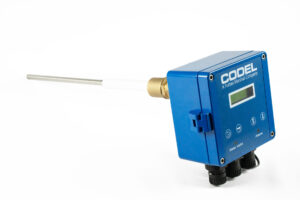
Certified to EN 15859 the EnergyTech 600 monitors continuous, real-time particulate emissions enabling proactive maintenance, minimises material loss, and reduces downtime.
Polvo
| Cookie | Duración | Descripción |
|---|---|---|
| cookielawinfo-checkbox-advertisement | 1 year | Set by the GDPR Cookie Consent plugin, this cookie records the user consent for the cookies in the "Advertisement" category. |
| cookielawinfo-checkbox-analytics | 11 months | This cookie is set by GDPR Cookie Consent plugin. The cookie is used to store the user consent for the cookies in the category "Analytics". |
| cookielawinfo-checkbox-functional | 11 months | The cookie is set by GDPR cookie consent to record the user consent for the cookies in the category "Functional". |
| cookielawinfo-checkbox-necessary | 11 months | This cookie is set by GDPR Cookie Consent plugin. The cookies is used to store the user consent for the cookies in the category "Necessary". |
| cookielawinfo-checkbox-others | 11 months | This cookie is set by GDPR Cookie Consent plugin. The cookie is used to store the user consent for the cookies in the category "Other. |
| cookielawinfo-checkbox-performance | 11 months | This cookie is set by GDPR Cookie Consent plugin. The cookie is used to store the user consent for the cookies in the category "Performance". |
| CookieLawInfoConsent | 1 year | CookieYes sets this cookie to record the default button state of the corresponding category and the status of CCPA. It works only in coordination with the primary cookie. |
| viewed_cookie_policy | 11 months | The cookie is set by the GDPR Cookie Consent plugin and is used to store whether or not user has consented to the use of cookies. It does not store any personal data. |
| _GRECAPTCHA | 6 months | Google Recaptcha service sets this cookie to identify bots to protect the website against malicious spam attacks. |
| Cookie | Duración | Descripción |
|---|---|---|
| TawkConnectionTime | session | Tawk.to, a live chat functionality, sets this cookie. For improved service, this cookie helps remember users so that previous chats can be linked together. |
| twk_idm_key | session | Tawk set this cookie to allow the website to recognise the visitor in order to optimize the chat-box functionality. |
| Cookie | Duración | Descripción |
|---|---|---|
| _ga | 1 year 1 month 4 days | Google Analytics sets this cookie to calculate visitor, session and campaign data and track site usage for the site's analytics report. The cookie stores information anonymously and assigns a randomly generated number to recognise unique visitors. |
| _ga_* | 1 year 1 month 4 days | Google Analytics sets this cookie to store and count page views. |
| Cookie | Duración | Descripción |
|---|---|---|
| VISITOR_INFO1_LIVE | 6 months | YouTube sets this cookie to measure bandwidth, determining whether the user gets the new or old player interface. |
| VISITOR_PRIVACY_METADATA | 6 months | YouTube sets this cookie to store the user's cookie consent state for the current domain. |
| YSC | session | Youtube sets this cookie to track the views of embedded videos on Youtube pages. |
| yt.innertube::nextId | never | YouTube sets this cookie to register a unique ID to store data on what videos from YouTube the user has seen. |
| yt.innertube::requests | never | YouTube sets this cookie to register a unique ID to store data on what videos from YouTube the user has seen. |