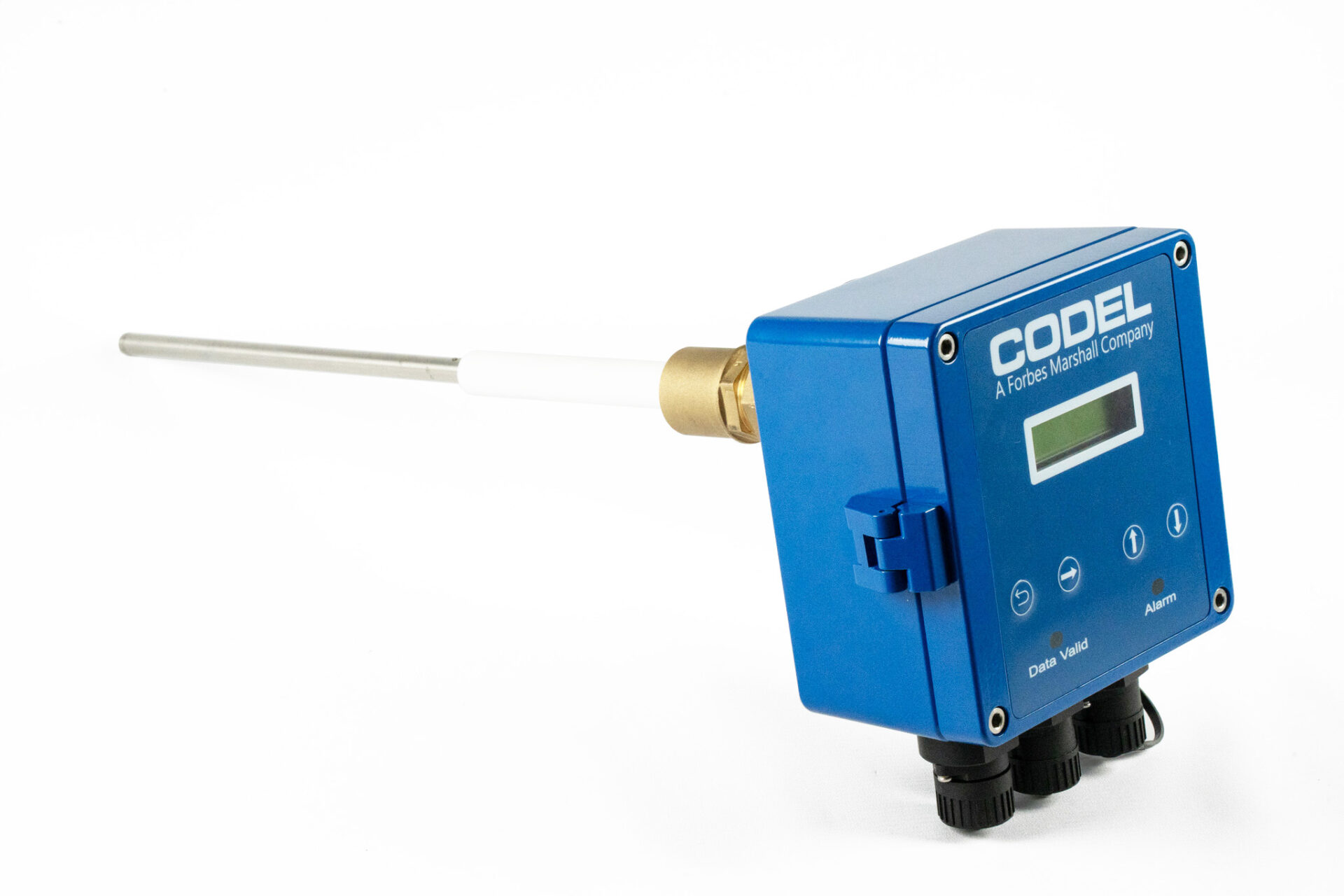
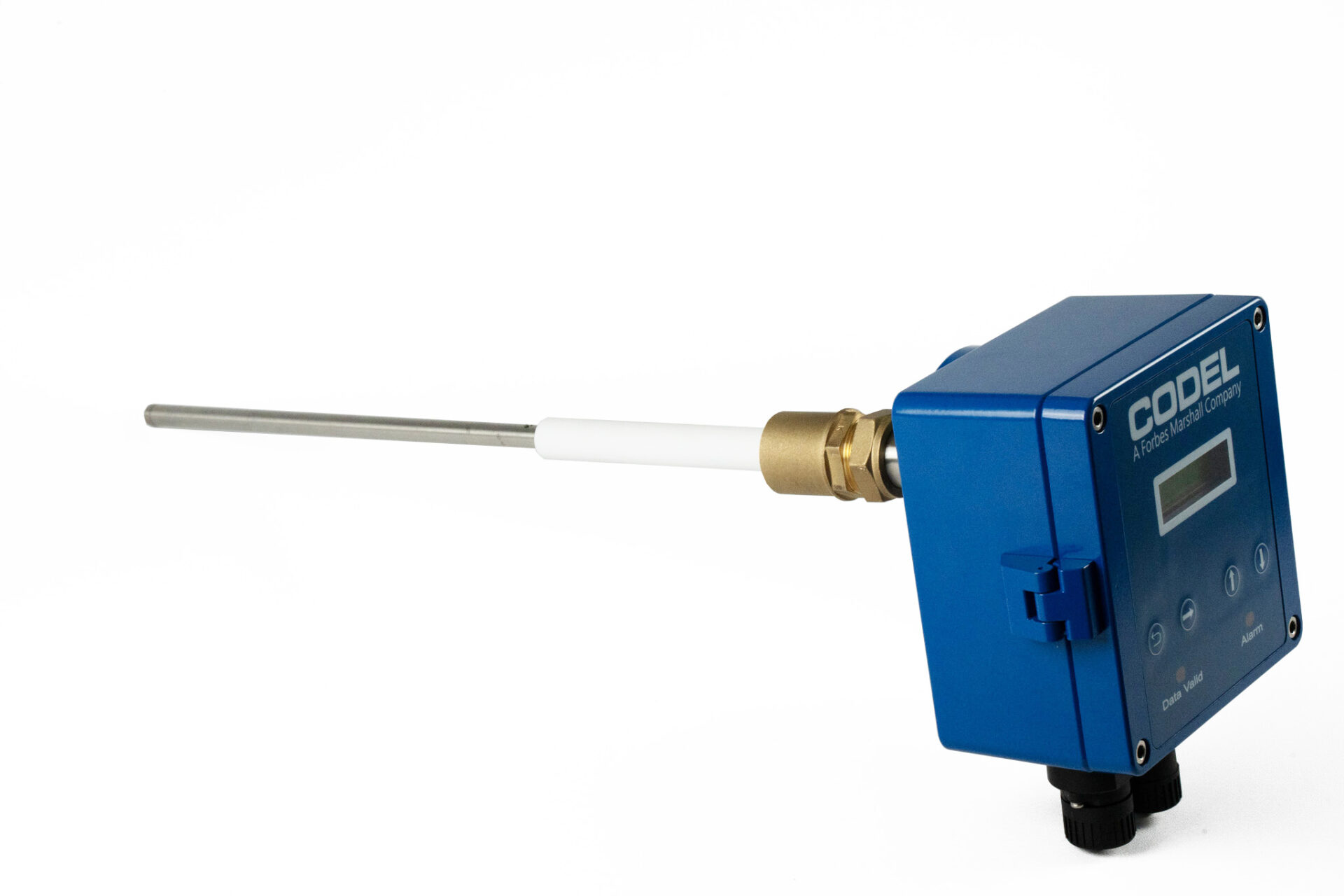
DCEM 6000
QAL1 Dust Analyser
Analizador triboeléctrico de polvo
El DCEM 6000 es el analizador de polvo triboeléctrico QAL1 de alta gama de CODEL, que ofrece una monitorización continua de las emisiones con gran precisión. Proporciona datos en tiempo real para respaldar el cumplimiento normativo y optimizar el rendimiento de la filtración.
Visión general
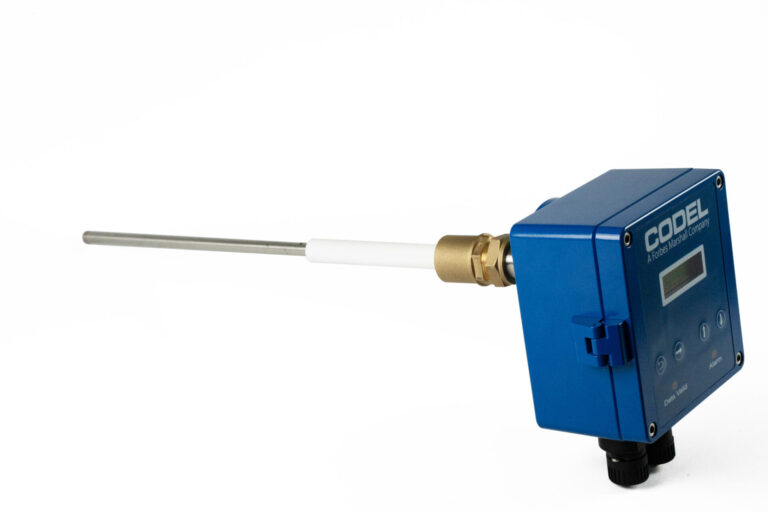
El DCEM 6000 es el analizador de polvo triboeléctrico insignia de CODEL, diseñado para la monitorización precisa y continua de las emisiones de partículas en procesos industriales. Gracias a su avanzada tecnología triboeléctrica, detecta incluso los niveles más bajos de polvo, lo que ayuda a los operadores a mantener un rendimiento óptimo de la filtración y a reducir las emisiones.
Con certificación QAL1 y totalmente conforme con las normas EN 15267-3 y EN 14181, el DCEM 6000 cumple con los más altos estándares normativos. Es una opción fiable para industrias que requieren datos precisos sobre emisiones y un cumplimiento medioambiental constante.
Características y ventajas
- Método de detección directa, concentración real de partículas.
- Función automatizada de verificación de cero y tramos en línea.
- Función de calibración integrada para la salida de mg/m3.
- Fácil instalación con un mantenimiento mínimo.
- Certified to EN 14181 & EN 15267-3 (QAL1)
- Compatible con CODEL Cloud
Especificaciones técnicas
| Principio de funcionamiento | Triboeléctrico |
| Certificación | EN 14181 y EN 15267-3 *QAL1 0-7,5 mg/m3 |
| Gamas complementarias | 0-15 mg/m3, 0-50 mg/m3, 0-100 mg/m3 |
| Rango operativo máximo | 0 - 500mg/m3 |
| Resolución | 0.01% |
| Tiempo de respuesta | Desde 30 segundos |
| Nivel de alarma | Programable por el usuario |
| Longitudes de sonda | 250, 500, 750 y 1000 mm |
| Temperatura del proceso | 0°C to +250°C |
| Temperatura ambiente | De -20 °C a +50 °C |
| Fuente de alimentación | 100-240 V CA +/- 10 % |
| Construcción | Fundición de aluminio con recubrimiento en polvo, resistente a la intemperie según IP66 (NEMA 4) |
| Dimensiones (mm) | H160 x W160 x D90 |
| Disposición de montaje | Se suministra con tubo corto de 1" BSP, 100 mm de longitud. |
| Precisión | +/- 0.2% |
Puedes encontrar las especificaciones completas en la ficha técnica del producto o en el folleto.
What is the DCEM 6000 used for?
The DCEM 6000 is a continuous triboelectric dust analyser designed to measure particulate emissions from industrial processes. It provides real-time particulate data to help operators demonstrate emissions compliance, monitor filtration performance and identify changes in dust emissions.
How does the DCEM 6000 measure dust?
The DCEM 6000 uses triboelectric technology to detect electrical charge generated as particles interact with the sensing probe. This provides a direct measurement of particulate activity and allows the system to monitor dust concentration continuously.
Does the DCEM 6000 measure actual dust concentration?
Yes. A key advantage of the DCEM 6000 is its ability to provide a direct particulate measurement, rather than simply measuring light transmission or opacity. It can provide an output in mg/m³, with an integrated calibration function for concentration measurement.
What industries can use the DCEM 6000?
- Power generation
- Cement manufacturing
- Industrial manufacturing
- Chemical manufacturing
- Mining
- Crematoriums
- Waste management and recycling
- Woodworking and sawmills
- Pharmaceutical manufacturing
- Dust collection systems
- Construcción
What measurement range does the DCEM 6000 cover?
The DCEM 6000 has a QAL1-certified range of 0–7.5 mg/m³, with supplementary ranges of 0–15, 0–50 and 0–100 mg/m³. Its maximum operating range extends to 0–500 mg/m³. The appropriate range depends on the application and regulatory requirements.
Can the DCEM 6000 detect low levels of dust?
Yes. The DCEM 6000 is designed to detect low particulate concentrations and is particularly suited to applications where operators need sensitive, continuous monitoring of emissions downstream of filtration or abatement equipment. CODEL describes the analyser as capable of detecting even very low dust levels.
Is the DCEM 6000 QAL1 certified?
Yes. The DCEM 6000 is QAL1 certified to EN 15267-3 and EN 14181, with its QAL1 certification covering the 0–7.5 mg/m³ range. This makes it suitable for regulated continuous emissions monitoring applications where certified particulate measurement is required.
How does the DCEM 6000 help monitor bag filters?
Continuous particulate measurement can provide an early indication of changes in filtration performance. An increase in measured dust levels can help operators identify potential problems with equipment such as bag filters or other particulate-abatement systems, allowing corrective action before emissions become a more significant issue. CODEL positions the DCEM 6000 for both compliance monitoring and optimisation of filtration performance.
Can the DCEM 6000 be integrated into a CEMS?
Yes. The DCEM 6000 is designed for continuous emissions monitoring and can form part of a wider CEMS installation alongside gas and flow monitoring equipment. It also supports integration with CODEL Cloud for access to monitoring data and reporting.
Is the DCEM 6000 suitable for US EPA applications?
Yes. The DCEM 6000 can be configured to satisfy US EPA 40 CFR Part 60, Appendix B, Performance Specification 11 (PS-11) for particulate matter CEMS. PS-11 is technology-neutral, meaning it does not prescribe a particular particulate measurement technology. The DCEM 6000’s triboelectric measurement principle can therefore be used where its performance is demonstrated against the applicable requirements
How does the DCEM 6000 compare with an optical dust monitor?
The main difference is the measurement principle. The DCEM 6000 uses triboelectric sensing, while an optical monitor such as the DCEM2100 uses light transmission to determine opacity/particulate concentration.
Triboelectric monitoring can be particularly attractive where direct particulate sensing, rapid response and straightforward installation are priorities. Optical monitoring can be preferable where opacity measurement or a particular optical monitoring methodology is required. The best choice depends on the application and regulatory requirements.
Consulta sobre productos
Ficha técnica / Descargar folleto
¿Buscas un manual?
Please contact us and we will be happy to help you.